|
Eadine Hickey | Brave Spaces “In an ordinary organization, most people are doing a second job no one is paying them for… most people are spending time and energy covering up their weaknesses, managing other people’s impressions of them, showing themselves to their best advantage, playing politics, hiding their inadequacies, hiding their uncertainties, hiding their limitations… We regard this as the single biggest loss of resources that organizations suffer every day.” An Everyone Culture: Becoming a Deliberately Developmental Organisation, Professor Robert Kegan and Lisa Lahey
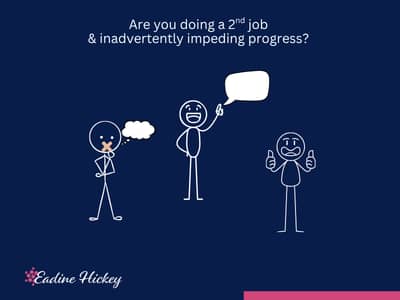
Organisations everywhere are chasing cost savings, but what if we could unlock significant efficiencies by cultivating the human capacity for honest and effective conversations, eliminating this second job which many of us engage in and unlocking so much more potential? When we reflect on the last week, how many of us sometimes chose what to say to give a good impression? Were there times when we didn’t say something for fear of offending someone or out of concern that there might be a harsh response? By skirting around issues or not sharing ideas, did we unintentionally impede progress? At a micro level, each conversation we have enables progress on key work tasks, challenges to be navigated, people to be supported in their development and so much more. But if we are giving and receiving only part of the picture through the conversations we have, we are working from incomplete data, holding people back and limiting what’s truly possible. As a self-confessed maths nerd in my youth, turned six sigma practitioner in GE, I had it drilled into me to make sure that when we are working on something that, we are working on the right problem. Mining for information became a valued skill, which has translated to the power of curiosity in my coaching work today. Having as close as we can to the full picture is essential, which means getting comfortable with hearing different and contrary perspectives. While many of us turn to AI now to find the answers to questions, it’s possible that we are missing the best source of information – the wisdom of those around us, including what we call in adaptive leadership, ‘the unusual voices’. The question then becomes: “How do we have a candid exchange with others, that enables progress, without blowing up the conversation or burying an issue?” There are many different factors which feed into this dynamic and this monthly newsletter series will unpack different elements including issues of power, identity, meeting norms and habits and our natural tendency to avoid discomfort. Through the newsletter I will invite reflection and encourage experimentation with micro habits which can have a ripple effect in wider systems. For now, perhaps you might consider over the next few weeks:
If this resonates and you’d like to explore it further, you can read more of my thinking on leadership, coaching and conscious leadership development at eadinehickey.com. ___ Eadine works with leaders and teams who are facing challenges that don’t have easy answers, who need a space for honest conversations. Clients are typically experts in their fields, including engineers, scientists, accountants and lawyers, who are navigating complexity and want a thinking-partner who understands both the intellectual and human dimensions of that work. |
Leadership as the sum of 1,000 conversations